
The story of the Armenian merchant is often told as one of individual survival—a tale of the lone peddler outwitting empires. But the true history of Armenian commerce is one of systems. No system was more sophisticated, more global, or more tragic than that of the Khojas of New Julfa.
For two centuries, this network of merchant aristocrats dominated the trade routes from London to Calcutta, effectively functioning as the world's first global corporation without a state, army, or navy. Yet, despite their immense wealth and influence, their empire vanished. The wealth of New Julfa did not translate into a permanent Armenian geopolitical stronghold in Iran.
Today, however, a new initiative seeks to resurrect this lost network—not in the mountains of Nakhichevan or the suburbs of Isfahan, but in the boundless territory of the digital realm.
I. The Ghost of Old Julfa
Before it became a memory, Julfa was a jewel. Located on the banks of the Aras River in the rocky gorges of Nakhichevan, Old Julfa was the quintessential "dry port" of the Silk Road. By the late 16th century, it had transformed from a modest village into a bustling metropolis, home to a class of merchant aristocrats known as Khojas.
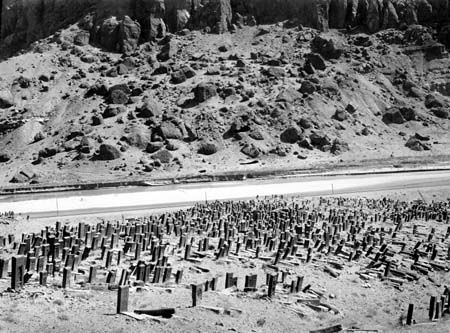
These were not mere traders; they were financiers and logistics experts who managed the flow of raw silk from the Caspian to the markets of Aleppo, Venice, and Amsterdam. Travelers of the era reported that the Khojas ate from silver plates and lived in mansions that rivaled those of European nobility. Yet, their location was their curse. Caught between the hammer of the Ottoman Empire and the anvil of Safavid Persia, Old Julfa was dangerously exposed—a wealthy prize with no walls to protect it.
II. The Great Surgun: Migration to the Golden Cage
In 1604, the Safavid Shah Abbas I, retreating from an Ottoman advance, made a cold, strategic calculation. To deny the enemy resources, he initiated a scorched-earth policy. He ordered the complete destruction of Old Julfa and the deportation of its entire population to the heart of Persia.
This was the Great Surgun (The Great Exile). The residents of Julfa were forced to cross the freezing Aras River; thousands perished in the icy waters. But unlike other deportees, the surviving Khojas were not treated as refugees. Shah Abbas viewed them as economic assets. He resettled them across the Zayandeh River from his capital, Isfahan, in a new, purpose-built suburb he named New Julfa (Nor Jugha).
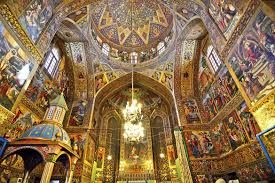
Here, the Khojas were granted a monopoly on the lucrative silk trade and unprecedented religious autonomy. They built palaces, cathedrals, and a trade network that became the envy of the world. They established a "trust network" so tight that a Julfa merchant could sign a contract in Isfahan and have it honored in Amsterdam or Manila with zero legal friction. They were, in effect, a sovereign economic state within a state.
III. The Mechanics of Empire: The Commenda System
The secret to their success was the commenda contract. In this system, a wealthy, sedentary "master" in New Julfa would entrust capital/goods to a younger "agent" who would travel the world to sell them. The agent would return years later, and the profits would be split—typically 75% to the master, 25% to the agent.
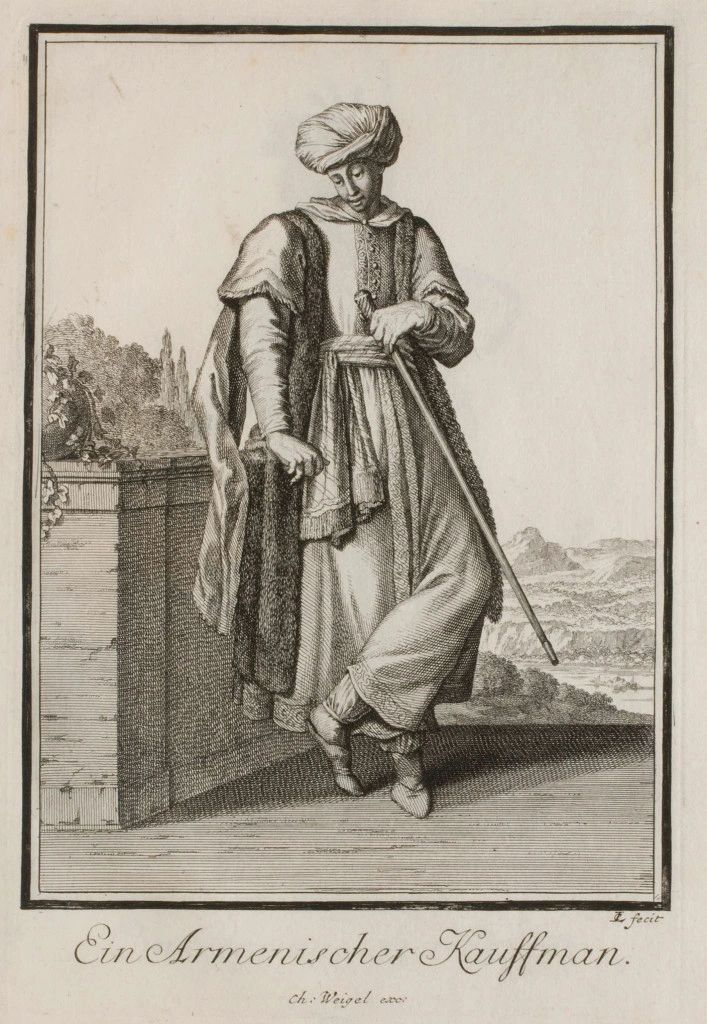
This system relied entirely on social capital. Because the master and agent were often from the same extended family or community, the threat of social ostracization kept corruption in check. A merchant who cheated his master would be blacklisted from London to Canton. This "reputation mechanism" allowed Armenians to operate more efficiently than their European rivals, who had to rely on slow, expensive courts to enforce contracts.
IV. Why the Success Didn't Translate
If the New Julfa network was so wealthy and powerful, why did it not result in a permanent Armenian power base? Why does the story end in decline rather than dominance?
The answer lies in the fragility of success without sovereignty.
The "Gilded Cage" Dilemma: The success of New Julfa was entirely dependent on Royal patronage. The Khojas were, legally speaking, the Shah's "private property" (gholam). As long as the Safavid dynasty was strong and benevolent (like Shah Abbas I), the Armenians thrived. But they had no political rights of their own. They were a wealthy minority in a theocratic state, tolerated only as long as they were useful.
The Predatory State: When the Safavid dynasty began to decline in the late 17th century, the state turned on its cash cow. Religious tolerance evaporated, replaced by forced conversions and heavy taxation. The final blow came with the rise of Nadir Shah in the 1740s. Desperate for funds for his military campaigns, Nadir Shah subjected New Julfa to extortionate taxes, effectively looting the community's accumulated wealth.
Capital Flight: Realizing their physical wealth made them targets, the Khojas did what capital always does when threatened: it fled. The great families moved their operations to Russia, India, and Europe, effectively dissolving the centralized network that had made them powerful.
The lesson of New Julfa was harsh: Physical wealth in a foreign land is always vulnerable.
V. The Resurrection: Digital Julfa
Three centuries later, the "Julfa" concept is being resurrected. But this time, it is immune to the whims of Shahs or the borders of empires.
The Digital Julfa Network, spearheaded by the Orion Worldwide Innovations group and its CEO Emma Arakelyan, is an ambitious attempt to recreate the New Julfa trade model using 21st-century technology.

The premise is simple yet profound: The New Julfa merchants succeeded because of a "trust protocol"—a shared cultural and legal framework that lowered the cost of doing business globally. Orion aims to replicate this protocol using Web3, Blockchain, and the Metaverse.
1. The Metaverse as the New Isfahan. In June 2025, the Digital Julfa Network officially inaugurated its "virtual trade center" on the Fastexverse platform. This 3D digital domain allows Armenian companies to set up virtual storefronts, negotiate contracts, and showcase innovation to a global audience without physical limitations. It is a digital "free trade zone" for the Armenian world.
2. Sovereignty Through Tech. Unlike the Khojas of 1604, who were vulnerable to physical deportation and confiscation, the Digital Julfa network operates on decentralized infrastructure. It is a "State of Mind" rather than a city of stone. It connects the "intellectual capital" of the diaspora—scientists, engineers, and financiers—into a unified economic bloc that cannot be taxed into oblivion or marched into exile.
3. The 7-Year Roadmap. Just as the old network had nodes in Venice, Amsterdam, and Calcutta, the Digital Julfa initiative has laid out a roadmap to establish digital-physical hybrid hubs in these same historic cities, starting with Dubai in 2025 and expanding to Venice, Amsterdam, Singapore, and Manila by 2032.
Conclusion
The tragedy of the original Julfa was that its walls could be burned and its people marched away. The vision of the Digital Julfa is to build a commercial empire that has no walls to breach. By moving the "Armenian Market" from the banks of the Aras to the blockchain, the Orion group is attempting to answer the question that haunted their ancestors: How do you build a nation's wealth that no one can take away?
This essay draws on the historical research of scholars like Sebouh David Aslanian and the current strategic documents of Orion Worldwide Innovations as of late 2025.