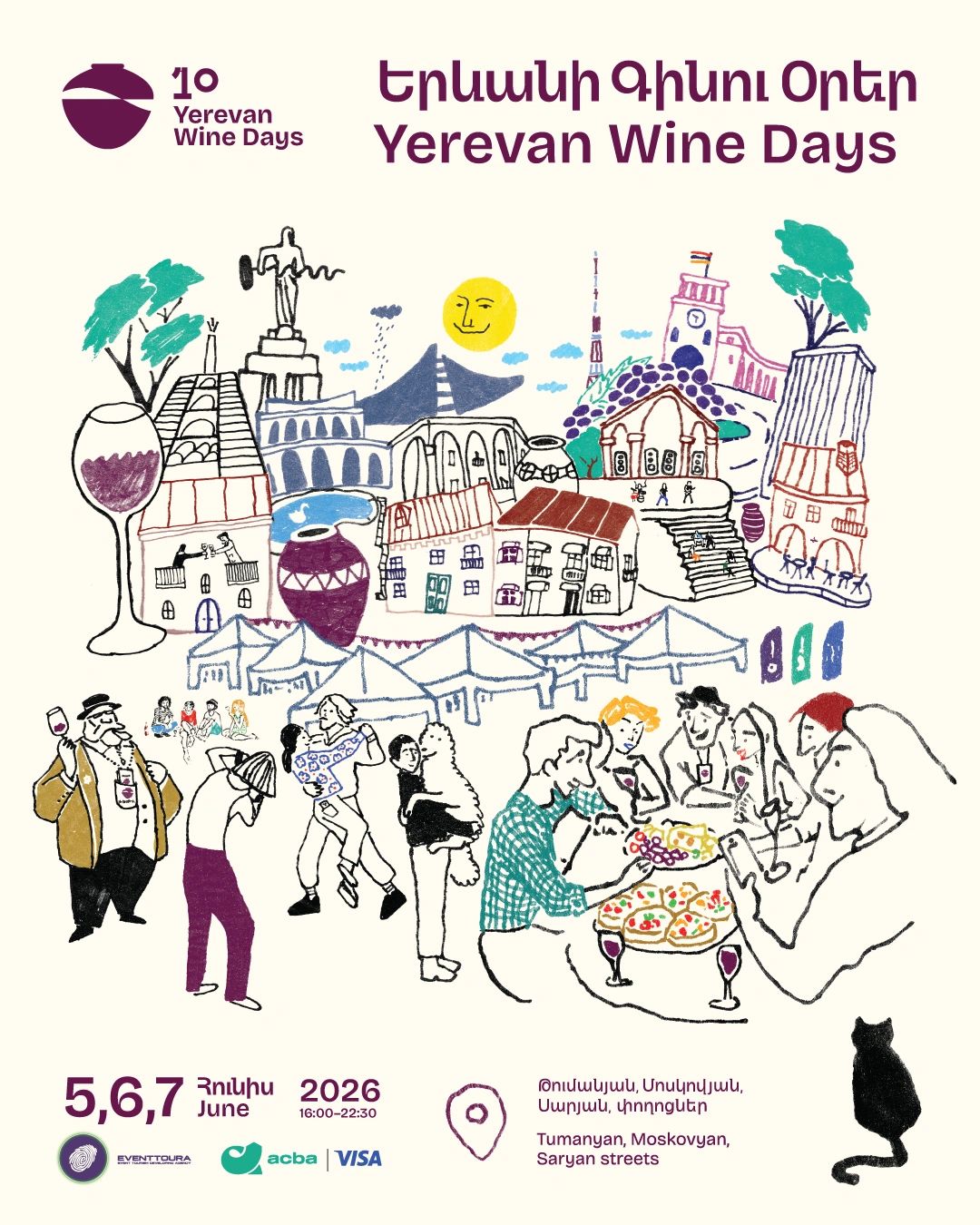
Every June, something unusual happens in the heart of Armenia's capital. Streets normally filled with cars and cafés—Saryan, Tumanyan, and Moskovyan—transform into a flowing river of people, wine glasses, music, and laughter. For three summer evenings, Yerevan becomes not just a city, but a living celebration of one of the world's oldest winemaking cultures. This is Yerevan Wine Days, the largest wine festival in Armenia and one of the most vibrant urban festivals in the region. The festival began relatively modestly in 2017, when a small group of organizers from EventToura decided to create a street celebration of Armenian wine. The first event featured about 25 wineries and roughly 2,000 visitors gathered mainly on Saryan Street—already known locally as Yerevan's "wine street."
What started as a simple experiment quickly grew into something much larger. Today, Yerevan Wine Days attracts hundreds of thousands of visitors, with around 180,000 attendees in 2025, roughly 40% of them international tourists. The festival has become a central pillar of Armenia's event tourism and a major showcase for the country's wine industry.
A Citywide Celebration
During the festival, central Yerevan becomes an open-air cultural corridor. Wineries from across Armenia set up tasting booths where visitors can sample hundreds of wines—from crisp whites to deep reds and rosés—many made from indigenous Armenian grape varieties such as Areni and Voskehat. Guests wander between tasting stations carrying a branded wine glass, often attached to a colorful holder worn around the neck—a small symbol of belonging to the festival community. But the event is about more than wine. Food stalls line the streets offering Armenian dishes, cheeses, and international cuisine. Live bands and DJs perform on outdoor stages, while crowds gather around tables, steps, and sidewalks to eat, drink, and talk late into the evening. The atmosphere feels less like a formal festival and more like a spontaneous citywide gathering.
Ancient Wine Culture, Modern Revival
Armenia has one of the oldest wine traditions on Earth. Archaeological discoveries such as the Areni-1 cave winery, dating back over 6,000 years, show that winemaking has been part of Armenian life since prehistoric times. Yerevan Wine Days connects this deep history with a modern revival of the country's wine industry. Since the festival's creation, Armenia's wine sector has grown rapidly. The event provides a platform for both established wineries and small producers to reach international audiences. In recent years, more than 1,000 varieties of wine from dozens of producers have been showcased at the festival. For many emerging wineries, Wine Days is their first opportunity to present their work directly to thousands of visitors.
The Social Ritual of Armenian Wine
Wine in Armenia is not simply a drink—it is a social ritual. At a traditional Armenian table, wine accompanies storytelling, music, and conversation that often stretches late into the night. Yerevan Wine Days captures that same spirit on a citywide scale. Strangers share tables, tourists meet winemakers, and music drifts between the buildings of the old city center. In a way, the festival turns the entire capital into a single Armenian "table"—a giant urban version of the traditional gathering known as the supra, where food, wine, and community come together.
More Than a Festival
For Armenia, Yerevan Wine Days has become more than a cultural event. It is a statement about identity and economic future. The festival helps position Armenia as a destination for wine tourism, bringing international attention to the country's vineyards, restaurants, and rural wine regions. It also highlights something deeper: Armenia's ability to connect ancient traditions with modern creativity. In a region often defined by geopolitics and conflict, Yerevan Wine Days offers a different image—one of music, culture, and thousands of glasses raised in celebration. For three nights each June, the city remembers something simple and powerful: sometimes the best way to understand a place is not through politics or history books, but through a glass of wine shared in the street.